A routine service can become expensive when symptoms, inspection findings and extra repairs are mixed into one vague approval. Use this sequence to document the car at arrival, separate maintenance from diagnosis, approve evidence-backed work and leave with measurable results and clear next steps.
Key takeaways
- Bring service records, registration details, insurance records and the spare key.
- Separate scheduled maintenance from diagnostic repairs before approving work.
- Ask for inspection evidence before approving replacement parts.
- Confirm the road test, final scan, invoice and vehicle condition at handover.
1. Book the visit and create a written intake record
Bring the owner’s manual, registration certificate details, service history, insurance or roadside-assistance records, and the spare key before booking. A car general service in Baner must follow the manufacturer’s schedule, not a universal kilometre figure: oil grade and quantity, coolant specification, transmission fluid, belts, and spark plugs vary by model.
1. Write down the registration number or VIN, current odometer reading, last service date, previous repairs, and work you want completed. Add every symptom, including when it appears, whether the engine is cold or hot, unusual noises, fluid leaks, reduced air-conditioning, poor braking, or increased fuel use.
2. Photograph existing dents, scratches, wheel damage, cracked glass, and the fuel gauge. Remove valuables, record items left in the cabin or boot, and note whether the spare wheel, tools, charging cable, and floor mats are present.
3. Ask the service advisor to record warning lamps, tyre condition, fuel level, body damage, and your complaints on the intake form. Read it before signing; an undocumented scratch or missing item becomes difficult to dispute later.
4. Ask for separate confirmation of routine service and diagnostic work. Engine misfires, overheating, brake judder, transmission faults, suspension noise, or an illuminated check-engine lamp need diagnosis rather than automatic replacement.
5. Require written approval before additional work begins. This car service checklist in Baner should identify safety-critical findings separately from recommendations, with the inspection evidence and estimated cost stated for each item.
2. Separate routine service from diagnostic repairs before approving work
A general service covers scheduled maintenance and visible checks; a separate diagnosis covers a fault whose cause is not yet proven. Use the owner’s manual or manufacturer schedule—not a universal kilometre figure—to define oil, filters, coolant, belts and spark plugs.
1. Put scheduled items in the routine column. Confirm the correct oil grade and quantity, inspect fluid levels and leaks, check the battery, tyres, brakes, lights, wipers, suspension and belts, and replace a filter or plug only when the schedule or inspection supports it.
2. Put symptoms in the diagnosis column. Misfire, check-engine lamp, overheating, transmission hesitation, brake judder, suspension noise, starting trouble and weak air-conditioning need fault-finding before parts are approved. A refrigerant top-up is not a diagnosis: check the cabin filter, blower, compressor, specified refrigerant and leaks first.
3. Ask the advisor to record evidence before quoting repairs. A scan can show stored or pending codes, but it does not identify the failed component. Request freeze-frame and live-data checks, wiring or component tests, and a confirmation test; do not approve code-clearing before the codes are documented.
4. Approve safety-critical repairs separately from recommendations. Ask for the measured fault, affected part, risk of driving, labour and parts cost, then authorise only the work you understand.
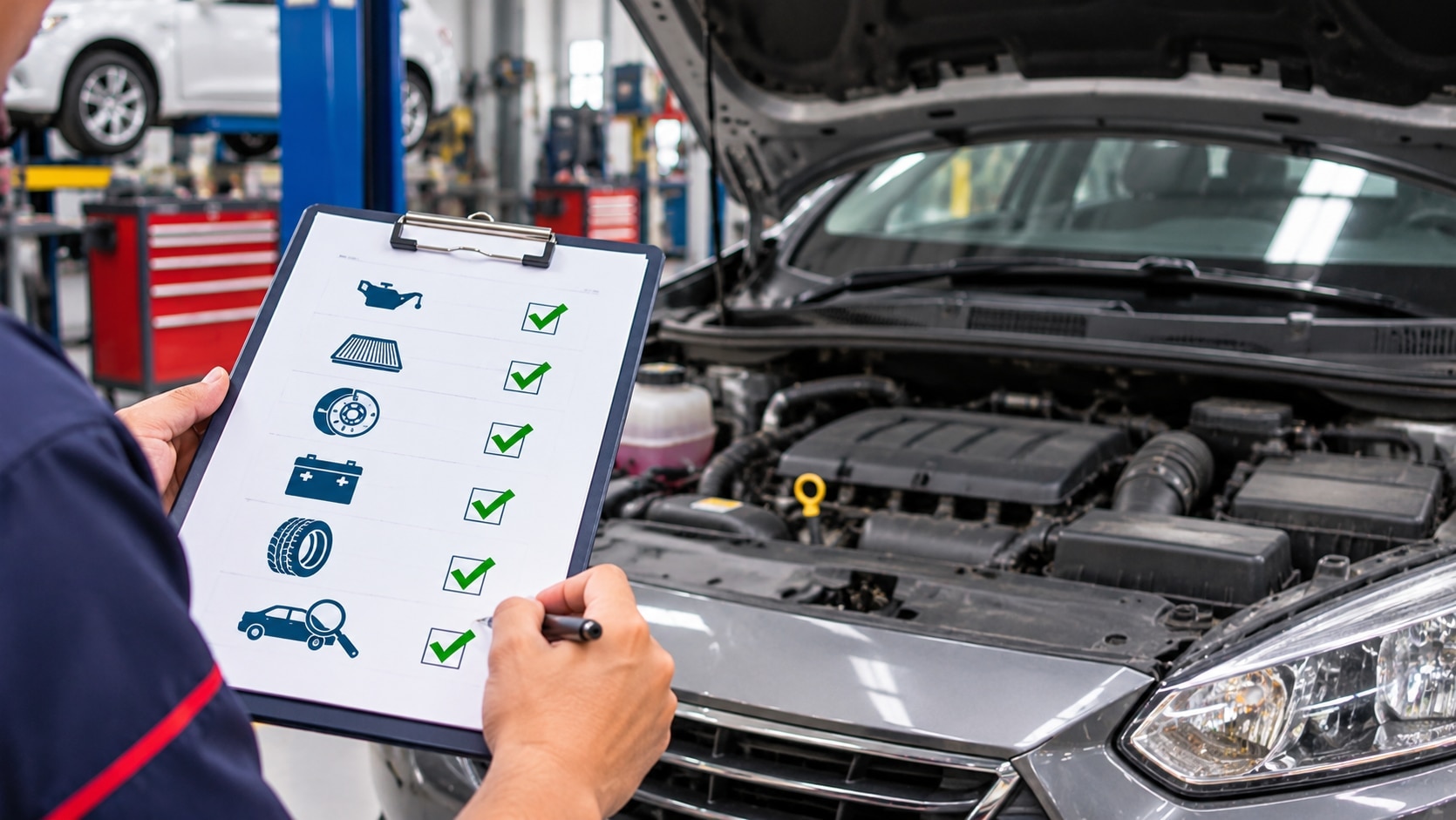
For a car general service checklist in Baner, mark each line as scheduled service, inspection finding or diagnostic repair. This car general service in Baner approach prevents an automatic replacement list from becoming the invoice.
3. Approve inspection findings, not an automatic list of replacements
Do not approve a replacement because it appears on a standard package. Ask the advisor to classify each finding as safety-critical, due by the manufacturer’s interval, or a recommendation, then show the evidence and price for the additional work.
1. Fluids: request the owner’s-manual specification, measured level, visible condition, leak location, and the reason for replacement rather than topping up. Coolant evidence should include concentration or freeze-protection reading; refrigerant work requires the correct refrigerant type and a leak check.
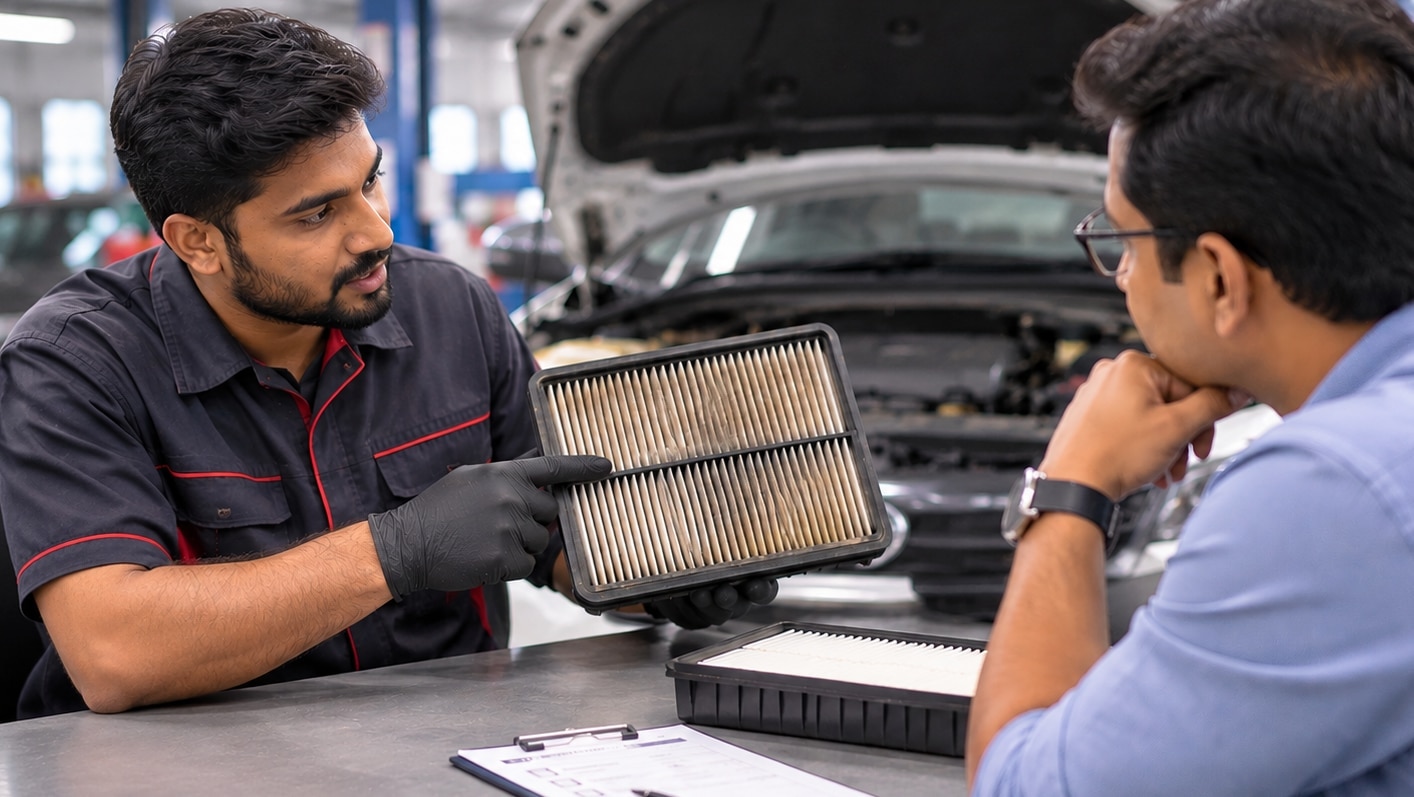
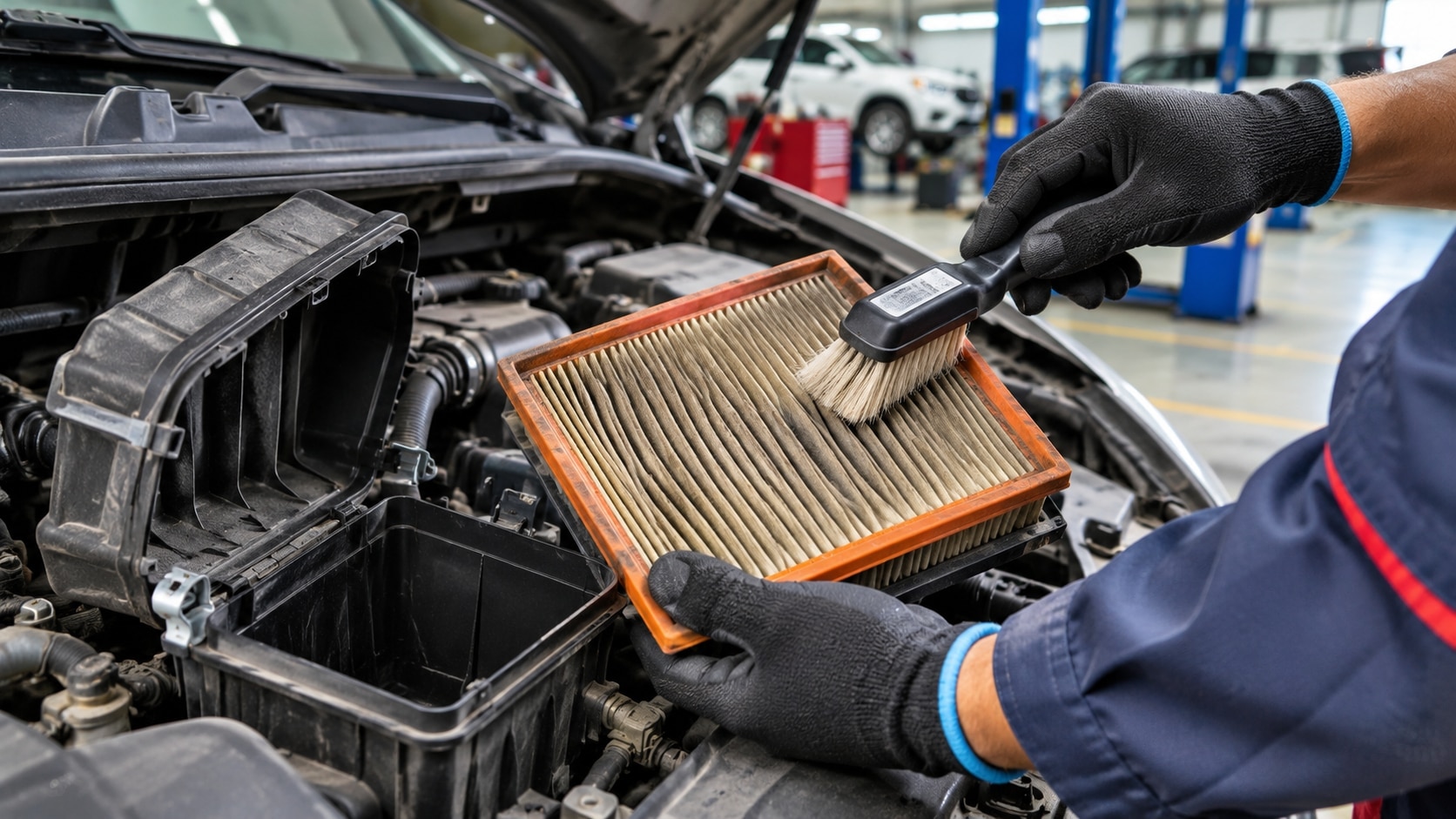
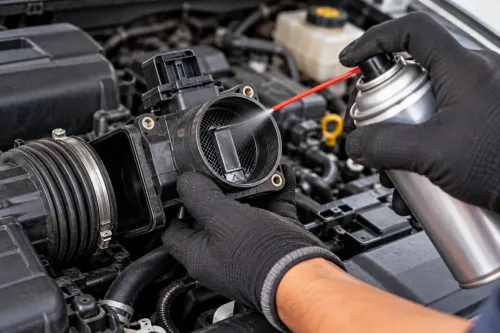
2. Filters: ask for the removed air, oil, fuel or cabin filter, or clear photographs showing dirt, blockage or damage. Compare the proposed interval with the vehicle’s service schedule.
3. Spark plugs: request the manufacturer’s interval, plug part number, electrode and insulator condition, and misfire or fault-code evidence if replacement is being proposed early.
4. Tyres: require tread-depth readings at several points, tyre-age markings, pressure readings, sidewall damage and an explanation of uneven wear. Approve alignment only with symptoms, impact or suspension work, plus measured camber, caster and toe.
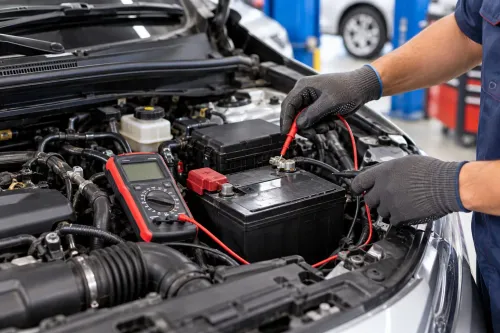
5. Battery: ask for voltage, cold-cranking or conductance-test results, terminal condition and battery age. A low charge alone does not prove the battery needs replacement.
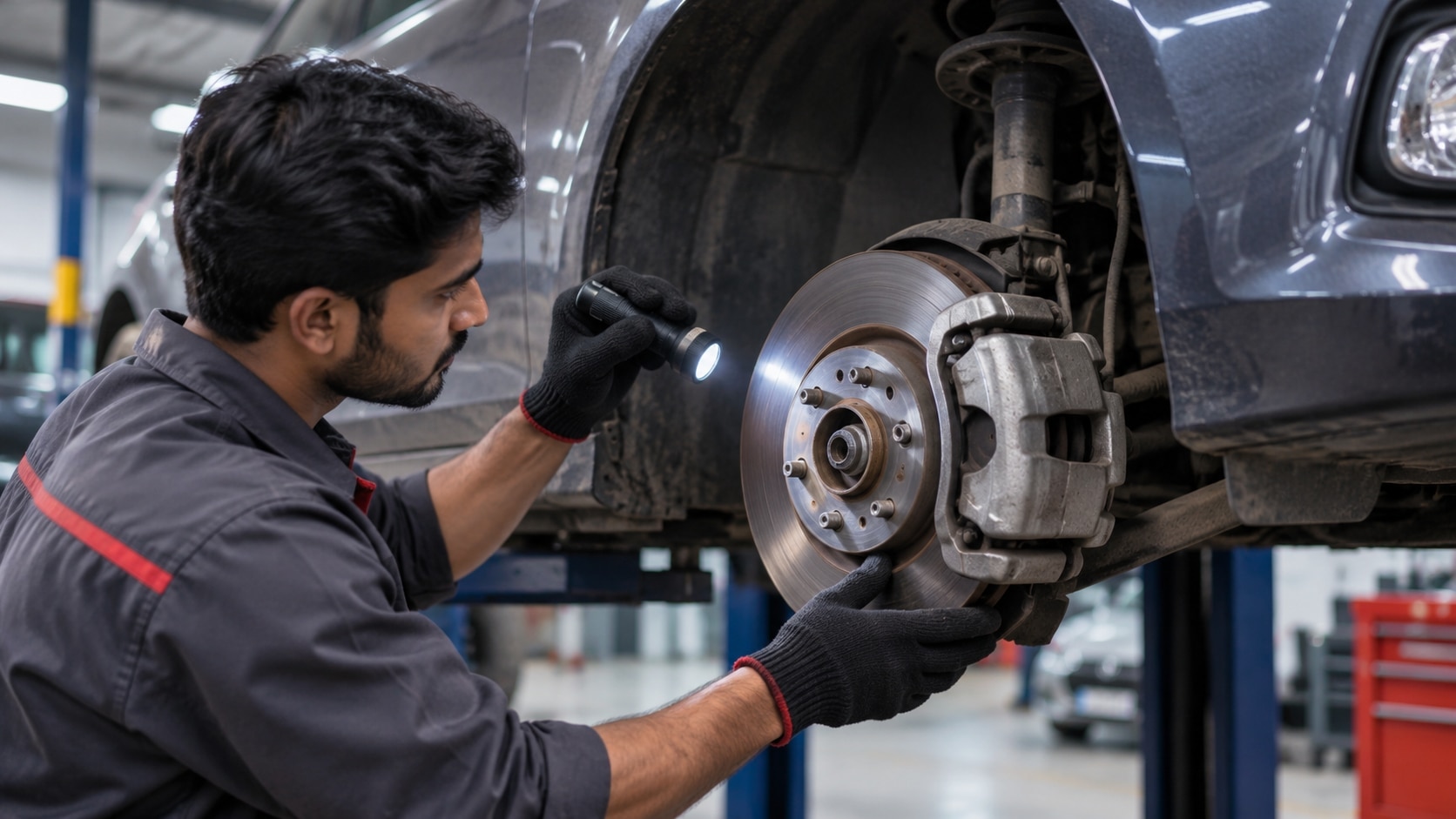
6. Brake parts: request pad thickness, disc thickness and minimum specifications, runout or judder evidence, and photographs of leaks or damaged hoses.
A car general service in Baner should leave this trail whether you use Auto Solutions or another workshop. Keep declined work and its safety consequence on the job card. A complete car service in Baner is easier to judge when every replacement has a measurement behind it.
Related product
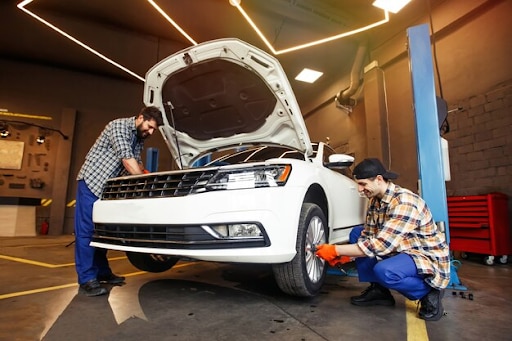 | Car General Service Auto Solutions offers complete car general service to keep your vehicle in top condition. View product → |
4. Require safety checks, a road test and a final diagnostic scan
A road test confirms whether the reported fault is gone under real driving conditions. Before leaving the bay, the technician should check that wheel fasteners are tightened, fluid caps and dipsticks are secure, tools and protective covers are removed, and no leaks are visible.
Use the road test to reproduce the complaint safely, then assess:
- Cold or hot starting and idle quality
- Gear engagement and shift quality
- Steering response, braking and brake-pedal vibration
- Suspension knocks, tyre noise and abnormal vibration
- Air-conditioning cooling, blower operation and outlet temperature
- Warning lamps, unusual smells and changes in engine performance
| Check | What it confirms | Failure response |
|---|---|---|
| Road test | The symptom no longer appears during the relevant drive condition | Record when it occurs and continue diagnosis |
| Safety inspection | Wheels, brakes, steering, leaks and serviced components are safe to use | Correct the fault before handover |
| Final diagnostic scan | No new stored or pending fault codes appeared | Investigate the code before clearing anything |
A scan is evidence, not a diagnosis. Record stored, pending and manufacturer-specific codes with freeze-frame data before clearing them; confirm the repair with live data, wiring or component tests, and a repeat test. A clear screen alone does not prove the fault is fixed.
For a car service checklist in Baner, insist that the road-test result and scan outcome appear on the job record. During a complete car service in Baner, ask for the failed test, corrective action and any remaining restriction in writing.
5. Check the invoice and vehicle carefully at handover
Before paying, compare the invoice with the written job approval and compare the car with its intake record. Use this car general service checklist in Baner at the desk and beside the vehicle, not from memory.
- Read the itemised invoice. Confirm the registration number, odometer, labour charges, taxes, parts, quantities, oil grade and quantity, coolant specification, and any diagnostic or alignment charges.
- Match every replacement to your approval. Ask which work was declined, what remains unresolved, and whether any immediate safety restriction prevents normal driving.
- Collect the diagnostic report, measured test results, wheel-alignment sheet if alignment was performed, warranty terms, and the next service trigger from the owner’s manual or manufacturer schedule.
- Check the exterior in consistent lighting against the intake record. Look for new dents, scratches, paint mismatch, panel gaps, glass or wheel damage, overspray, polish residue, masking residue, warning stickers, and missing protective films.
- Check the cabin, boot and engine bay for returned belongings, loose trim, removed covers, fluid leaks, warning lamps, and abnormal smells. Confirm the spare wheel, tools and spare key are present.
- Start the engine and confirm that the reported symptom has changed; check air-conditioning operation, brake-pedal feel and steering response before leaving. Ask for a road-test explanation if the vehicle was not road-tested.
For car general service in Baner, do not accept “serviced” as the complete record. Pay only after the invoice, documents and vehicle condition agree.
Frequently asked questions
What should I bring for a car general service in Baner?
Bring the owner’s manual, registration certificate details, service history, insurance or roadside-assistance records and the spare key.
How do routine service and diagnostic repairs differ?
Routine service follows the manufacturer’s schedule. Diagnostic repairs investigate a reported symptom, warning light or inspection finding before parts are replaced.
Should I approve every replacement recommended during a car service?
No. Ask for the inspection finding, measurement, fault code or photograph that supports each replacement, then approve necessary work separately from optional work.
What checks should be completed before collecting the car?
Require safety checks, a road test and a final diagnostic scan. At handover, compare the invoice with the approved work and inspect the vehicle for new damage.
Keywords