A dirty or inaccurate MAF sensor can resemble an intake leak, ignition fault, clogged filter, or fuel-pressure problem, so spraying the sensor is not a diagnosis. You will be able to decide whether cleaning is suitable, what checks to request from a local provider, and when replacement or a different repair is the safer choice.
Key takeaways
- Check intake leaks, the air filter and fault codes before cleaning.
- Use only MAF-specific cleaner; never touch the hot-wire or hot-film element.
- Choose diagnosis before cleaning when symptoms point to wiring or intake faults.
- Replace the sensor when testing confirms an inaccurate or unstable signal.
What the MAF sensor measures—and which symptoms justify investigation
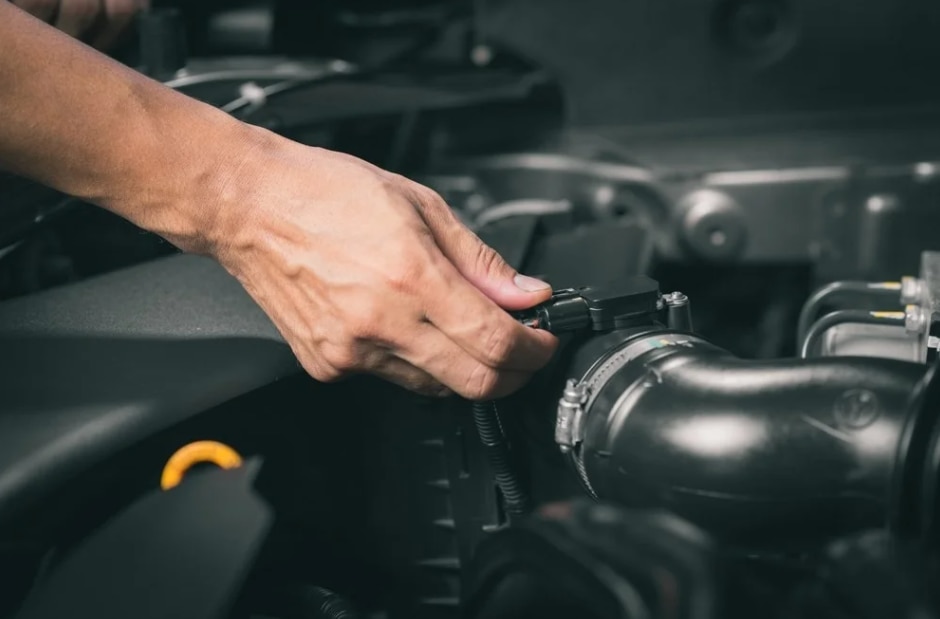
A MAF sensor sits in the intake tract between the air-filter housing and the engine. Its hot-wire or hot-film element measures incoming air mass by monitoring how airflow cools a heated wire or film; the engine control unit uses that signal to calculate fuel delivery and related load and ignition decisions.
Contamination can contribute to hesitation, an unstable idle, stalling, hard starting, restricted acceleration, abnormal fuel consumption, or a check-engine light. None of these symptoms proves that the MAF is dirty: an intake leak, ignition fault, fuel problem, wiring defect, or clogged filter can produce the same result.
“Car air flow sensor cleaning” usually means cleaning the MAF, not replacing or washing the air filter and not cleaning every intake-air sensor.
| Sensor | What it measures | Test and cleaning approach |
|---|---|---|
| MAF | Air mass entering the engine in the intake duct | Check live airflow data, wiring, intake leaks, and the sensing element; use dedicated MAF cleaner only when inspection supports contamination |
| MAP | Pressure inside the intake manifold | Test manifold-pressure readings, vacuum and electrical circuits; use a different cleaning and diagnostic procedure |
A MAP sensor does not measure incoming air mass. Cleaning a MAP as if it were a MAF can damage the component or leave the actual fault unresolved. 恒一
What must be checked before anyone cleans the sensor
Before approving a maf sensor cleaning service, require a diagnosis that can separate contamination from an intake, electrical, or engine fault.
1. Ask for a scan-tool report. P0100–P0104 identify MAF circuit or signal concerns, including range and intermittent faults; they do not prove contamination caused the problem.
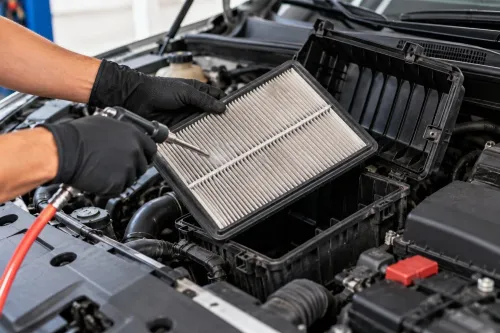
2. Require inspection of the air-filter housing, filter condition, intake duct, clamps, connector, wiring, power supply, and breather or PCV hoses. A cracked intake boot, loose clamp, failed hose, or manifold vacuum leak can admit unmetered air and mimic a dirty MAF.
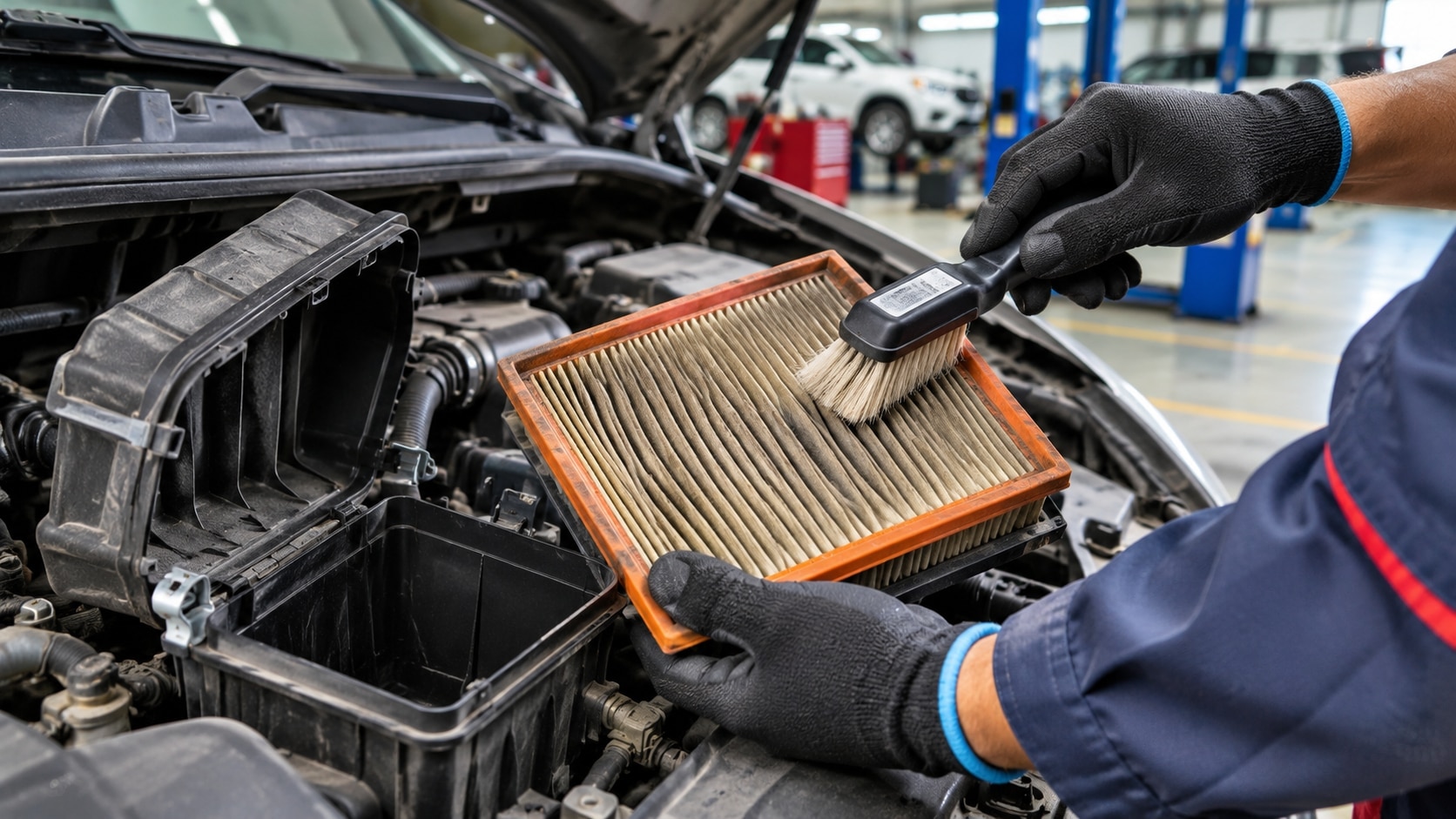
3. Check for an over-oiled aftermarket filter. Oil can coat a hot-wire or hot-film element, while a clogged filter can restrict airflow; repeatedly cleaning the sensor without correcting either cause invites the fault back.
4. Check competing causes, including an ignition fault, fuel-pressure problem, throttle-body carbon, and any other unmetered-air problem. Each can produce hesitation, unstable idle, stalling, or abnormal fuel trims that look like incorrect MAF reporting.
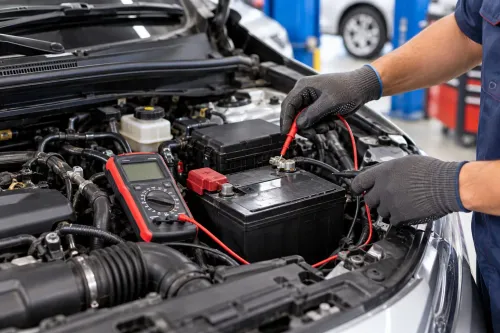
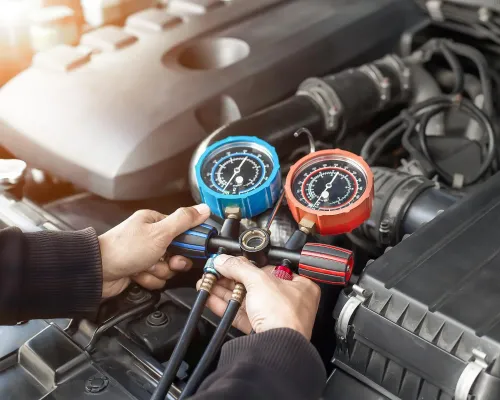
5. Request live airflow data at idle, under acceleration, and at steady cruise. Judge the readings against the engine, operating condition, and manufacturer specifications—not one universal grams-per-second number, since displacement, speed, load, intake design, and barometric conditions change the result.
Clean the sensor only after it and the surrounding intake system pass these checks.
What safe MAF cleaning involves—and when DIY is a poor choice
Cleaning is safe only after you identify the MAF design, vehicle-specific instructions, and whether the unit includes an intake-temperature sensor or forms part of the intake assembly. Some assemblies are not serviceable by cleaning alone.
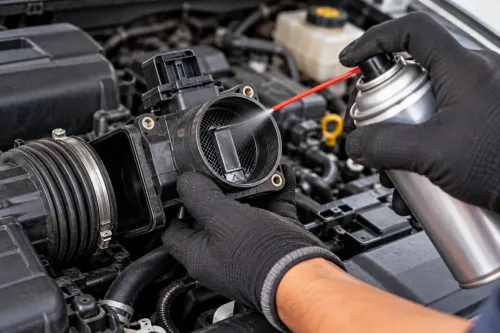
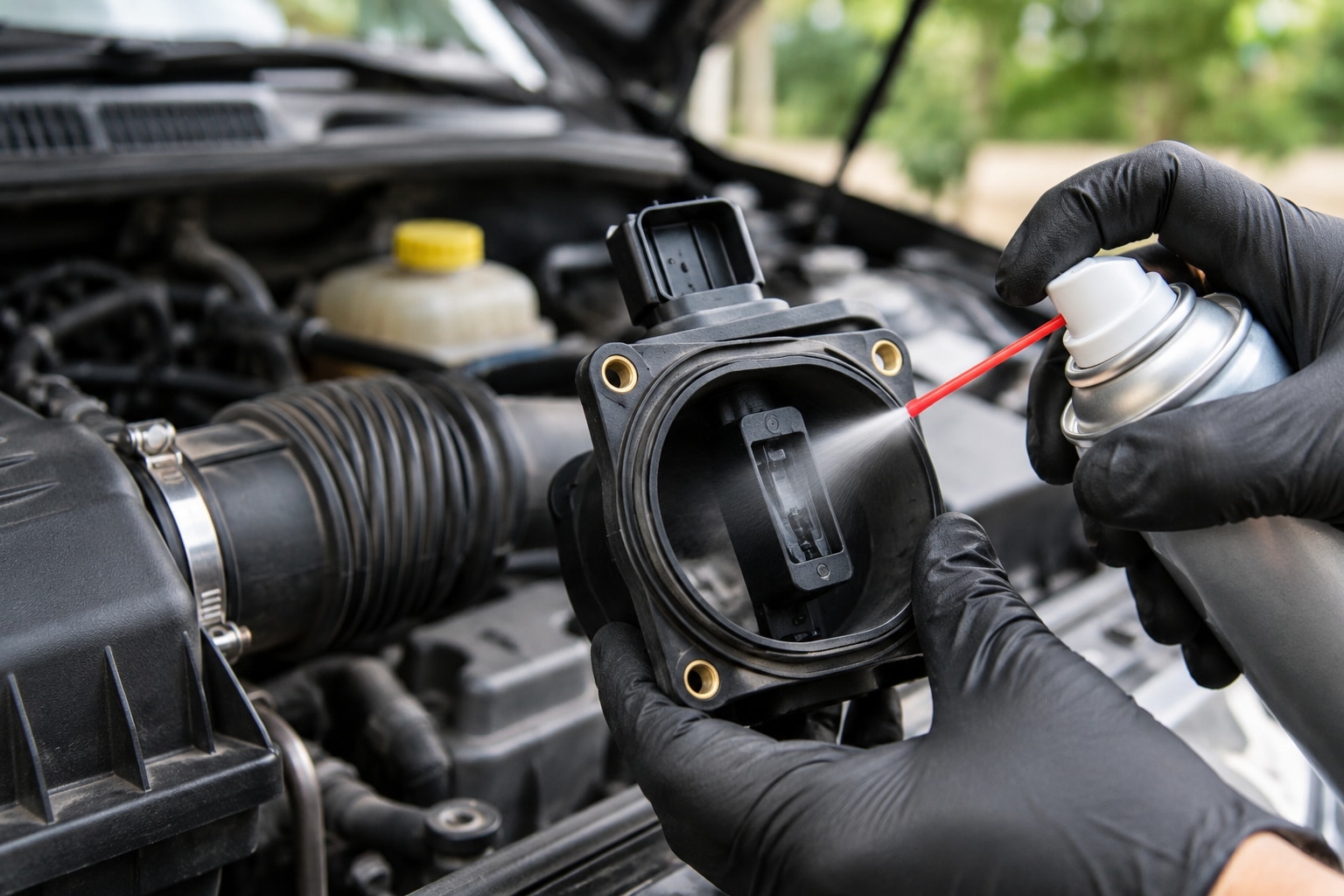
- Remove the sensor without touching its hot wire or hot-film element.
- Use only a product explicitly labelled for MAF sensors.
- Spray the element without scrubbing, wiping, brushing, scraping, or touching it.
- Do not use carburettor cleaner, brake cleaner, contact cleaner, household solvent, or close-range compressed air.
- Let every trace of solvent evaporate completely before refitting the correct seal and reconnecting the connector.
- Confirm the connector locks firmly and the seal is seated without distortion.
| Option | Advantage | Main risk |
|---|---|---|
| DIY cleaning | Lower time and cost | Damage from incorrect solvent, force, access, or refitting |
| Professional maf sensor cleaning service | Diagnosis, live-data checks, and controlled handling | Higher cost and possible follow-up repair |
DIY is a poor choice with persistent warning lights, stalling, several fault codes, difficult access, delicate sensing elements, or uncertainty about MAF versus MAP. A professional should check the intake assembly and connector before cleaning, because the wrong sensor or a non-serviceable integrated unit can turn a simple job into damage and repeat faults.
If you spray while the sensor remains installed, solvent can enter the intake or electrical connector; that shortcut is not safe cleaning.
How to choose among MAF sensor cleaning options in Baner
For maf sensor cleaning options in Baner, choose a provider that diagnoses the fault before removing anything. A spray-only visit is not equivalent to a maf sensor service in Baner that verifies the cause and result.
| Option | What it includes | Trade-off |
|---|---|---|
| Spray-only visit | Cleaner sprayed or sensor removed with little testing | Lower price, but it can miss air leaks, wiring faults and a contaminated filter |
| Diagnostic service | Scan, intake inspection, live MAF readings, cleaning and verification | Takes longer and accounts for access, removal and solvent-drying time |
| Diagnostic service with follow-up | Testing plus a return visit if contamination was not the cause | Best when codes or symptoms persist after cleaning |
Ask these questions before booking a “maf sensor cleaning near me” appointment:
- Will you scan the car and diagnose before cleaning?
- Will you check downstream intake leaks, cracked boots, clamps, PCV or breather hoses?
- Will you inspect the air filter, housing, connector and wiring?
- Will you record live MAF data before and after the work, then show you the scan results?
- Do you remove the sensor, use dedicated MAF cleaner, and allow complete drying?
- How will you protect the seal and connector, and will you clear codes only after testing?
- What findings would justify replacement instead of cleaning?
Auto Solutions can be compared with other Baner providers by these answers, not by proximity or a low advertised price. Ask whether the quote allows for difficult access, solvent drying and a return visit when cleaning is not the fault.
Related product
 | MAF Sensor Cleaning Auto Solutions provides expert MAF (Mass Air Flow) sensor cleaning to optimize your engine’s performance. View product → |
When cleaning should give way to replacement—and how to verify the result
Replacement is the stronger choice when the MAF housing is cracked, the sensing wire or film is burned or physically damaged, terminals or electronics are faulty, the manufacturer’s test fails, repeat MAF codes return, or live data remains inaccurate after correct cleaning.
| Option | What the evidence shows | Correct action |
|---|---|---|
| Cleaning | Removable dust or oily film, sound wiring, and plausible live data after inspection | Clean with dedicated MAF cleaner |
| Diagnosis or repair | Intake leak, clogged filter, throttle-body deposit, fuel-pressure fault, or ignition problem | Fix the underlying fault first |
| Replacement | Damaged hardware, failed electronics, failed manufacturer test, or inaccurate output after cleaning | Install the correct sensor and verify it |
Do not replace a functioning sensor to treat an intake leak, clogged filter, throttle-body deposit, fuel-pressure fault, or ignition problem. A MAF sensor cleaning service cannot repair those causes, and repeatedly cleaning the sensor will not stop contamination from returning if an over-oiled filter is responsible.
Cleaning alone does not guarantee the warning light will disappear. The technician may need to repair the root cause, clear stored codes, reset adaptive fuel trims, perform an idle or throttle relearn, or follow the vehicle’s manufacturer-specific drive cycle.
After the repair, request:
- A scan for current and pending codes
- Live MAF readings at idle, acceleration, and steady cruise
- A road test under those same conditions
- Confirmation that the original fault code does not return
Clean only when inspection and live data support contamination; choose diagnosis or replacement when the evidence points elsewhere.
Frequently asked questions
What symptoms justify investigating a MAF sensor?
Poor acceleration, rough idling, stalling, hard starting, reduced fuel economy and an illuminated engine warning light justify testing the sensor and its intake system.
What should be checked before cleaning a MAF sensor?
Check stored fault codes, the air filter, intake duct, clamps, vacuum leaks, electrical connector, wiring and sensor readings before cleaning.
How should a MAF sensor be cleaned safely?
Remove it according to the vehicle service procedure, spray only MAF-specific cleaner onto the sensing element, let it dry completely and never touch or wipe the wire or film.
When should a MAF sensor be replaced instead of cleaned?
Replace it when diagnostic testing shows an inaccurate or unstable signal, damaged sensing element, failed circuit or a fault that returns after proper cleaning.
Keywords