A shallow parking dent, a scraped bumper and a collision that looks minor can require very different repairs. By the end, you will know when paintless dent repair is suitable, when a panel or safety inspection is necessary, how refinishing is carried out, and how to check the result before accepting the vehicle.
Key takeaways
- Inspect wheel, bumper and door-pillar impacts before cosmetic repairs.
- Use paintless dent repair only when paint remains intact.
- Treat exposed metal promptly to prevent corrosion under new paint.
- Compare written estimates, repair time, paint warranty and insurance excess.
Is the damage cosmetic, or does the vehicle need a safety inspection first?
Denting and painting are enough only when the impact has left the panel, paint and nearby fittings intact. A shallow cosmetic dent with uncracked paint, even gaps and no change in driving behaviour can qualify; a proper safety inspection comes first when the hit reached a corner, wheel, bumper or door pillar.
Look for these warning signs:
- The bonnet, boot, doors or headlights no longer sit flush, or panel gaps differ from the undamaged side. This can indicate structural damage, displaced mounts or a bent frame.
- The bumper cover looks lightly marked but its absorber, brackets, crash boxes or reinforcement may be crushed. Request a crash beam inspection rather than approving paintwork alone.
- The car pulls, the steering wheel sits off-centre, a tyre rubs, or tread wear becomes uneven. Arrange suspension checks and a post-repair wheel-alignment check.
- Parking sensors, blind-spot warnings, airbags, automatic emergency braking or lane-keeping functions show a warning. A diagnostic scan and ADAS inspection may reveal faults hidden behind the bumper, grille or windshield.
- Ask for a frame inspection if the impact involved a pillar, chassis rail, suspension mounting point or major wheel strike. Do not accept heat-straightening or pulling without the vehicle-maker’s repair procedure, especially with high-strength steel or aluminium panels.
Sensor replacement is not the only issue: altered bumper position, ride height, wheel alignment or mounting can require static calibration, dynamic calibration or both. A workshop should document the scan, measurements and calibration before cosmetic work is signed off.
Which repair method suits the dent, scratch or damaged panel?
Choose the least invasive method that restores the panel’s shape, corrosion protection and finish without weakening the metal.
| Option | What it means | When it applies |
|---|---|---|
| Paintless dent repair (PDR) | Reshapes metal from behind without sanding or repainting | Small dents with intact paint, no sharp crease, and clear rear access |
| Conventional dent pulling | Pulls or pushes distorted metal, then restores its surface | Deeper dents or stretched steel that PDR cannot reach or control |
| Body filler repair | Sands the panel, applies filler over remaining low spots, then primes and paints | Minor surface irregularities after straightening; thick filler is not a substitute for metal repair |
| Panel replacement | Removes the damaged panel and fits an approved replacement | Torn, sharply creased or badly stretched metal, or high-strength steel that OEM procedures prohibit pulling |
| Spot repair | Repaints a limited area and blends the colour into nearby paint | Clear-coat scuffs, paint-deep scratches or small chips when surrounding paint is sound |
| Full repaint | Repaints the entire panel, with blending into adjacent panels when needed | Extensive scratches, widespread fading, multiple repair zones or a visible colour mismatch |
Select PDR only when the paint film is intact; cracked paint, distorted edges and blocked access disqualify it. Bare steel needs primer and corrosion protection before refinishing, not just colour paint.
For aluminium, use a dedicated repair area and tools because steel contamination can promote galvanic corrosion. High-strength steel also requires the manufacturer’s repair method: excessive heat or unauthorised pulling can reduce its designed strength.
What happens during dent repair, corrosion treatment and colour matching?
A technician starts by measuring the dent, checking the panel’s edges and body lines, and identifying the metal type. Panel straightening follows the approved method for that material: high-strength steel may require replacement or limited pulling, while aluminium needs dedicated tools and a clean work area.
Paintless dent repair suits intact paint and reachable, unstretched metal; cracked paint, sharp creases or blocked access require another method.
- The technician removes loose paint, rust and contamination, then restores the shape with controlled pulling, pushing or approved panel replacement.
- Exposed steel receives bare-metal corrosion treatment before the next stage. The surface must not sit unprotected because humid air can cause flash rust; the workshop uses the OEM-specified primer, seam sealer, cavity wax or underbody protection for that location.
- Filler application corrects small remaining lows, not major structural distortion. The technician sands it progressively until the surface is smooth and the panel profile matches the surrounding area.
- Primer seals the prepared surface and creates a consistent base. Each product follows its technical data sheet for mixing ratio, flash time, spray setup and temperature or humidity limits.
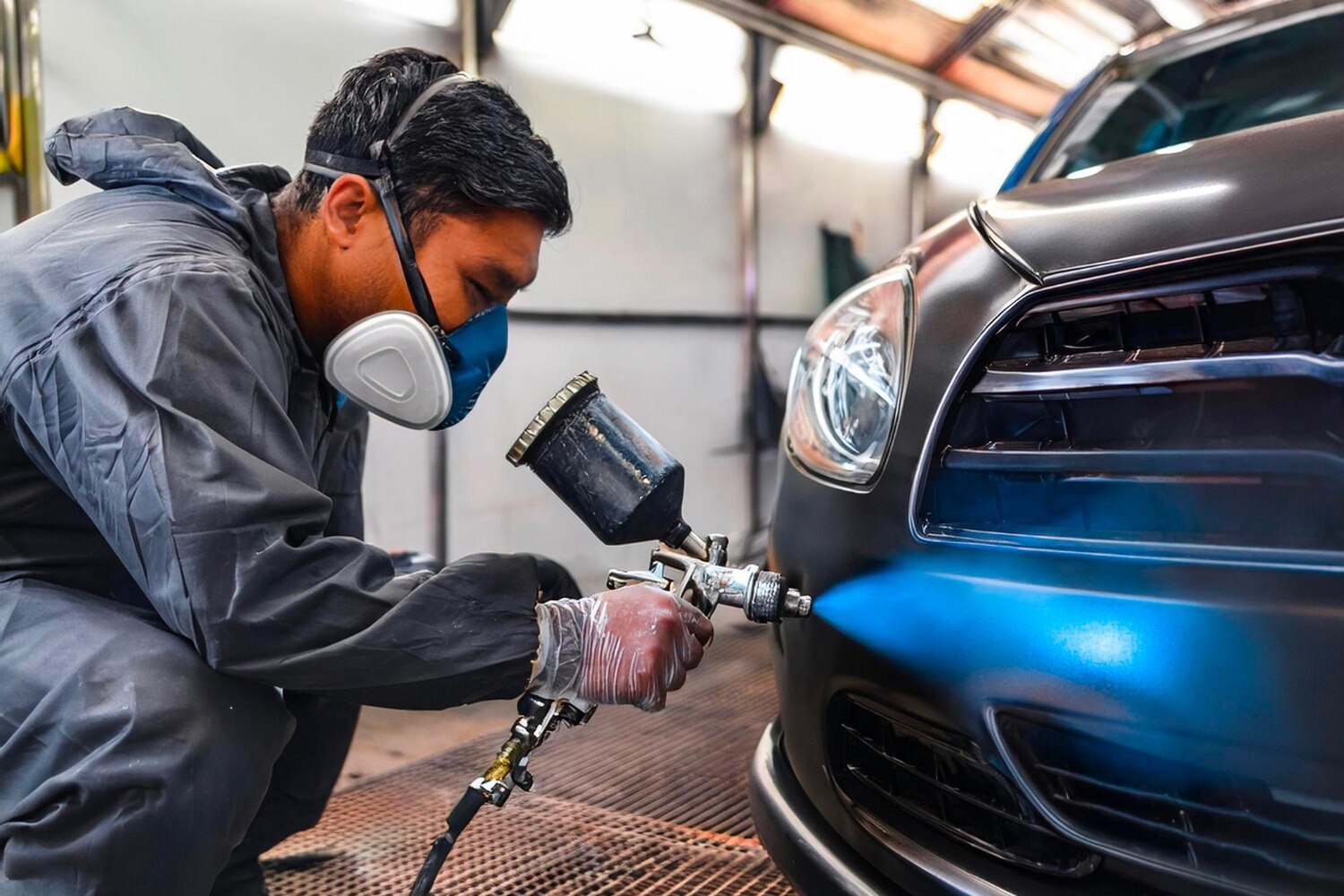
A colour code identifies a paint formula, but it cannot account for fading, formula variants, substrate colour or spray technique. The technician sprays a test panel, adjusts the formula if needed, then blends the basecoat into adjacent paint before applying clearcoat.
After curing, polishing removes controlled surface texture and reveals whether the repair has an even gloss, transition and colour.
How should you compare estimates, insurance choices and repair time?
A repair estimate should let you compare like with like: list each damaged panel, repair or replacement method, labour hours, parts, paint and consumables, taxes, corrosion protection, wheel alignment, sensor calibration and warranty. Ask whether the price includes dismantling; hidden damage found underneath can change the total.
Contact the insurer before authorising stripping, repairs or part replacement if you plan to claim. Send photographs, the registration and policy details, then confirm the deductible, depreciation, no-claim-bonus effect, cashless workshop eligibility and approval process. Compare your total out-of-pocket cost with a cash repair, not just the insurer’s approved amount.
- Ask whether the quoted colour work includes blending into adjacent panels.
- Get the expected handover date and the event that could extend it: parts delay, supplemental approval, or paint curing.
| Option | What affects downtime | What to verify |
|---|---|---|
| Spot repair | Small area, accessible damage, colour match and clearcoat curing | The repair will not leave a visible hard edge |
| Single-panel repaint | Sanding, primer, masking, paint matching and curing | The entire panel is included, not only the scratch |
| Blended repair | Extra preparation and paint on neighbouring panels | The estimate names every blended panel |
| Multi-panel repaint | More preparation, colour matching and curing across panels | Door gaps, trims and reassembly are included |
| Painted replacement panel | Part availability, painting, transfers and fitting | The panel is correct for your vehicle and corrosion protection is restored |
A painted replacement panel can reduce straightening time but still wait on supply and paint work. Ask for daily updates when parts or insurer approval control the schedule.
How do you check the finished repair and choose a capable workshop?
A durable repair looks right in daylight and remains sound underneath. Inspect the panel from several angles for paint defects such as orange peel, dust nibs, runs, fish-eyes, dry spray and colour mottling.
- Check for colour mismatch across the repaired and adjacent panels, especially along the blend edge.
- Run your hand over the surface; ripples, sanding scratches and sharp filler edges indicate poor preparation.
- Confirm panel gaps, bonnet and boot alignment, door operation, lamp fitment and trim clips.
- Look inside the panel and wheel arch for exposed steel, overspray, missing seam sealer or absent cavity protection.
- Request wheel alignment and suspension checks when the impact reached a wheel, steering component or mounting point.
Compare workshops by capability, not showroom appearance.
| Capability | Evidence to request | Risk if absent |
|---|---|---|
| Paint refinement | Daylight inspection, test-panel colour matching and documented blend plan | Visible colour mismatch |
| Controlled refinishing | Enclosed booth, spray booth filtration and controlled curing | Dust, dry spray or weak paint adhesion |
| Corrosion protection | Primer, seam sealer, cavity wax and underbody treatment where specified | Rust beneath a flawless finish |
| Damage verification | Panel measurements, scan reports and alignment records when relevant | Hidden geometry or safety faults |
At Auto Solutions, ask for the written repair warranty, including its duration, coverage for peeling, cracking, rust and colour failure, and every exclusion. Follow the handover sheet: allow the stated cure time, avoid pressure washing and waxing until cleared, and return immediately if bubbling, lifting or water enters a lamp.
Frequently asked questions
When does a dent require a safety inspection before cosmetic repair?
Arrange a safety inspection when the impact reaches a corner, wheel, bumper or door pillar, or changes gaps, steering, braking or driving behaviour.
Which repair method suits a dent or scratch?
Paintless dent repair suits shallow dents with intact paint. Conventional dent repair and refinishing suits cracked paint, stretched metal, deep scratches or damaged panels.
What happens during dent repair, corrosion treatment and colour matching?
A technician removes or reshapes the damaged area, treats exposed metal, applies primer and prepares the surface before matching, blending and curing the paint.
How should you compare denting and painting estimates?
Compare the listed panels, repair method, parts, paint materials, corrosion treatment, taxes, insurance excess, warranty and promised completion date.
How do you check a finished dent and paint repair?
Inspect the panel in daylight for colour mismatch, overspray, sanding marks, ripples, uneven gaps, loose fittings and paint defects, then test affected functions.