A restricted engine air filter can increase intake pressure drop, limit air at high load, and make poor acceleration feel like a fuel or ignition fault. By identifying the filter type, inspecting its housing and seal, and matching the remedy to the damage, you can decide whether cleaning is safe or replacement is the correct repair.
Key takeaways
- Replace a dirty paper engine filter; do not wash or blow it clean.
- Clean reusable filters only with the manufacturer’s specified kit and drying time.
- Check the airbox seal and intake duct before blaming the filter.
- A clean filter cannot fix ignition, fuel, sensor, or turbocharger faults.
Which air filter affects the engine, and which protects the cabin?
The engine air filter protects the engine; the cabin filter protects you. The engine air filter location is inside the airbox, upstream of the intake duct, throttle body, or turbocharger, where it keeps dust from reaching the cylinders.
The cabin filter sits in the HVAC intake, often behind the glovebox or below the windscreen, and cleans air entering the passenger compartment.
| Filter | Location and purpose | Blockage symptoms |
|---|---|---|
| Engine air filter | Airbox before the engine intake; stops dust reaching cylinders | Restricted acceleration under high load and increased intake vacuum |
| Cabin air filter | HVAC intake behind the glovebox or below the windscreen; filters passenger-compartment air | Weak blower airflow, window fogging, poor heating or cooling |
The engine filter replacement interval in your handbook is a starting point, not a universal rule. Inspect it sooner if you drive near construction, on dusty roads, through agricultural areas, during frequent idling, or off-road. A restriction gauge or manometer gives better evidence than appearance alone when the manufacturer specifies a test procedure.
The cabin filter blockage symptoms point to an airflow problem inside the HVAC system, not an engine fault. A clean engine filter does not clean cabin air, and replacing the cabin filter will not protect the engine. That cabin air filter difference matters: each filter serves a separate intake and needs separate maintenance.
How restriction changes airflow, fuel metering, and engine load
Dust accumulation increases air filter restriction: the intake pressure drop across the element rises as the engine demands more air. At light throttle, fuel metering may change little because the engine control system adjusts fueling using measured airflow and oxygen-sensor feedback.
| Condition | Airflow effect | Likely result |
|---|---|---|
| Light throttle | Control system compensates for moderate restriction | Little noticeable change |
| High load | Restricted element reduces ingested air and increases intake vacuum | Softer throttle response, limited acceleration, or rich operation |
| Severe restriction | Airflow falls outside expected control limits | A fault code may appear |
This relationship between fuel metering and air filter blockage becomes clearer during sustained acceleration, climbing, towing, or high-speed driving. A dirty filter is not a horsepower upgrade in reverse: replacing a normally serviceable element rarely produces a large power gain.
Airflow also depends on the intake duct, collapsed hose, throttle body, turbocharger, and exhaust. A new filter cannot repair a blocked catalytic converter or another restriction elsewhere in the system.
Filter efficiency has a trade-off. Finer media captures smaller particles but creates more initial pressure drop, while a low-restriction element may capture less dust or demand more careful sealing and maintenance. ISO 5011 laboratory results help compare air-cleaner efficiency and flow, but they cannot predict every vehicle’s real-world result.
How to inspect the filter, airbox, and sealing surface
With the engine switched off, begin the airbox inspection before deciding that the filter needs replacement.
1. Open the airbox and photograph the filter in place. Capture its orientation, airflow direction, and the position of any locating tabs before removing it.
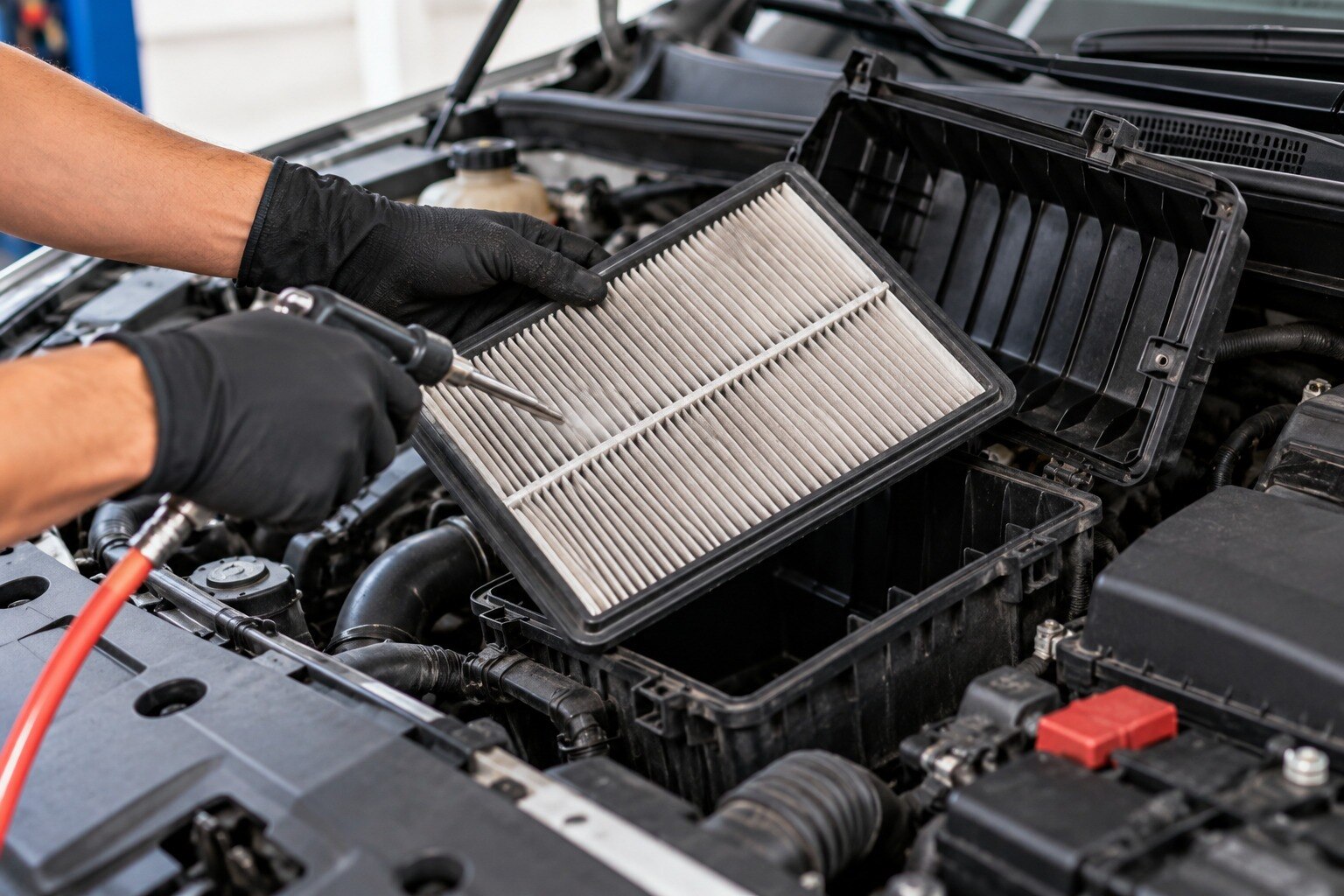
2. Examine the dirty side of the air filter, which faces the incoming-air duct. Look for an even dust load, fine embedded dirt, crushed pleats, tears, oil staining, mould, or water damage.
Do not replace a paper element solely because it is gray: captured dust shows that filtration is working, and colour does not reveal its remaining capacity.
3. Check the filter gasket seal around the frame, the airbox clips, and the sealing land. Look for a distorted rubber or foam gasket, missing fasteners, trapped dirt, warped plastic, or a visible gap. A new element cannot stop unfiltered air when the housing is warped or the gasket does not seat.
4. Use a restriction gauge or manometer at the engine manufacturer’s specified test condition when the vehicle provides that procedure. The allowable restriction limit varies by engine and air-cleaner design, so do not apply a universal mileage or appearance rule.
5. Replace the element when its media is saturated, torn, mouldy, oil-contaminated, or water-damaged, or when its frame or gasket is deformed. Never knock, vacuum, or blast a paper filter with compressed air; hidden holes or separated pleats can turn a cleaner-looking element into a bypass path for abrasive dust.
When to clean a reusable filter and when to replace a paper one
Identify the construction before cleaning. Most original-equipment engine filters are disposable pleated paper filter elements made from cellulose or synthetic media. Replace them; do not wash, vacuum, tap, or repeatedly blow them out. A purpose-built washable cotton-gauze or foam element can be serviced, but safe air filter cleaning requires the filter maker’s exact procedure.
1. Remove the reusable element and gently clear loose dust without crushing the pleats or foam. Knocking, vacuuming, or high-pressure air can create holes, separate pleats, and loosen the seal, leaving abrasive dust a path into the engine.
2. Apply only the approved cleaner, rinse in the specified direction and manner, and let the element dry completely. Never refit a wet filter.
3. Apply only the specified amount of oil when the design requires it. Too little oil reduces filtration; excess cotton gauze filter oil can migrate into the intake and contaminate the mass-airflow sensor.
4. Refit the element squarely, clean the sealing land, and secure every airbox clip. A gap, distorted gasket, or unsealed airbox can bypass even a correctly serviced filter.
Replace a disposable pleated paper filter when it is torn, water-damaged, oil-contaminated, mouldy, saturated, or deformed. A gray appearance alone does not prove failure, but damage does. Never try reusable foam air filter cleaning methods on paper media.
How to tell an air-filter problem from another performance fault
Start with the symptom and evidence, rather than replacing parts by guesswork. A loaded engine air filter most clearly affects performance during sustained acceleration or high load, so inspect it and measure restriction before condemning it. This is the basis of dirty air filter diagnosis.
- Clogged fuel filter symptoms point toward fuel-pressure loss or hesitation under load.
- A dirty throttle body can cause unstable idle or poor initial response.
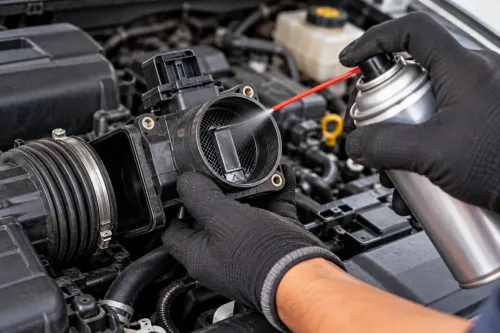
- A faulty MAF sensor can produce inaccurate airflow readings, drivability problems, and diagnostic trouble codes. Never spray it with brake cleaner, carburettor cleaner, compressed air, or household solvent.
- Weak ignition coil symptoms commonly include a misfire. A blocked catalytic converter causes power loss that worsens as engine speed rises.
- Low tyre pressure reduces road acceleration without restricting intake airflow. A restricted cabin filter reduces blower output, not engine power.
When the cause is unclear, a technician can check filter restriction, filter and airbox sealing, intake hoses, fuel pressure, ignition performance, scan data, and exhaust backpressure. Auto Solutions in Baner can make that distinction during a structured inspection instead of changing a filter because it looks dirty.
Frequently asked questions
Which car air filter affects engine performance?
The engine air filter sits in the airbox before the throttle body or turbocharger and keeps dust out of the cylinders. The cabin filter cleans air entering the passenger compartment and does not control engine airflow.
Can a dirty air filter increase fuel consumption?
A restricted filter reduces the air available to the engine. The engine control system adjusts fuel metering around measured airflow, and severe restriction can reduce power and increase engine load. Modern engines may show no obvious fuel-economy change until restriction becomes significant.
Should you clean or replace a car air filter?
Replace a paper or disposable filter when its pleats are loaded with dirt, the paper is damaged, or the service interval requires it. Clean a reusable filter only according to its manufacturer’s method; oil-wetted filters need the correct cleaner, oil, and drying time.
How can you tell an air-filter problem from another performance fault?
Inspect the filter, airbox, sealing edge, intake duct, and clamps first. If airflow is clear and sealed but the engine still lacks power, investigate faults such as a blocked fuel filter, failing ignition coil, dirty airflow sensor, boost leak, or turbocharger problem.