A detailing package can mean anything from a careful wash to paint correction, upholstery extraction, ceramic coating, or odour remediation. By checking the inspection process, task sequence, material-specific methods, and written scope, you can tell whether a service matches your vehicle’s actual condition.
Key takeaways
- Request timestamped photos and a written pre-detail condition report.
- Follow wash, decontamination, correction, and protection in sequence.
- Match interior cleaners to each surface’s moisture tolerance.
- Accept the car only after a documented handover inspection.
Start With a Documented Pre-Detail Inspection
Before touching the vehicle, a professional detailer should complete a pre-detail inspection and create a written condition report with timestamped photographs. This protects both sides: pre-existing damage cannot be mistaken for detailing damage, and the agreed scope can be priced accurately.
- Record the registration number, odometer reading, fuel or charge level, and the vehicle’s overall condition.
- Photograph existing scratches, paint defects, dents, stone chips, peeling clear coat, repainted panels, and sharp creases. Note thin or damaged edges where machine polishing could remove excessive clear coat.
- Inspect wheels, tyres, wheel arches, glass, lights, badges, exterior trim, and roof for kerb damage, cracks, stains, corrosion, or loose parts.
- Check the cabin for stains, odours, worn or cracked leather, damaged fabric, sagging headliner material, loose trim, broken switches, and debris in seat rails or door jambs.
- Record warning lights, damaged seat-mounted airbags, exposed wiring, aftermarket screens, dash cameras, charging equipment, speakers, accessories, and modifications.
- Identify sensitive systems before cleaning, including infotainment screens, USB ports, microphones, camera lenses, radar surfaces, charging connectors, and driver-assistance sensors.
The report should state which defects cleaning can improve and which require repair, paint correction, diagnostics, or calibration. A coating or polish must not be promised before this assessment; a test spot and paint-thickness reading can prevent irreversible damage.
Follow the Correct Exterior Detailing Sequence
Put wheels ahead of paint, and rinse loose grit before any contact wash. That order prevents brake dust and sand from becoming scratches when they are dragged across clear coat.
- Identify the wheel finish, then clean wheels, tyres, and wheel arches while they are cool. Painted, clear-coated, polished, chrome, aluminium, and ceramic-coated wheels need compatible chemicals and brushes; never let wheel cleaner dry on a hot surface.
- Apply a pre-rinse to remove loose grit, followed by snow foam or a suitable pre-wash. Rinse thoroughly before touching the body.
- Wash from the cleanest panels downward with fresh solution, clean wash media, and frequent rinsing. Keep wheel brushes, buckets, and dirty water away from painted panels.
- Dry with clean, paint-safe towels or filtered air, then perform paint decontamination for bonded iron, tar, or industrial fallout. Use a clay bar only where contamination remains after chemical treatment.
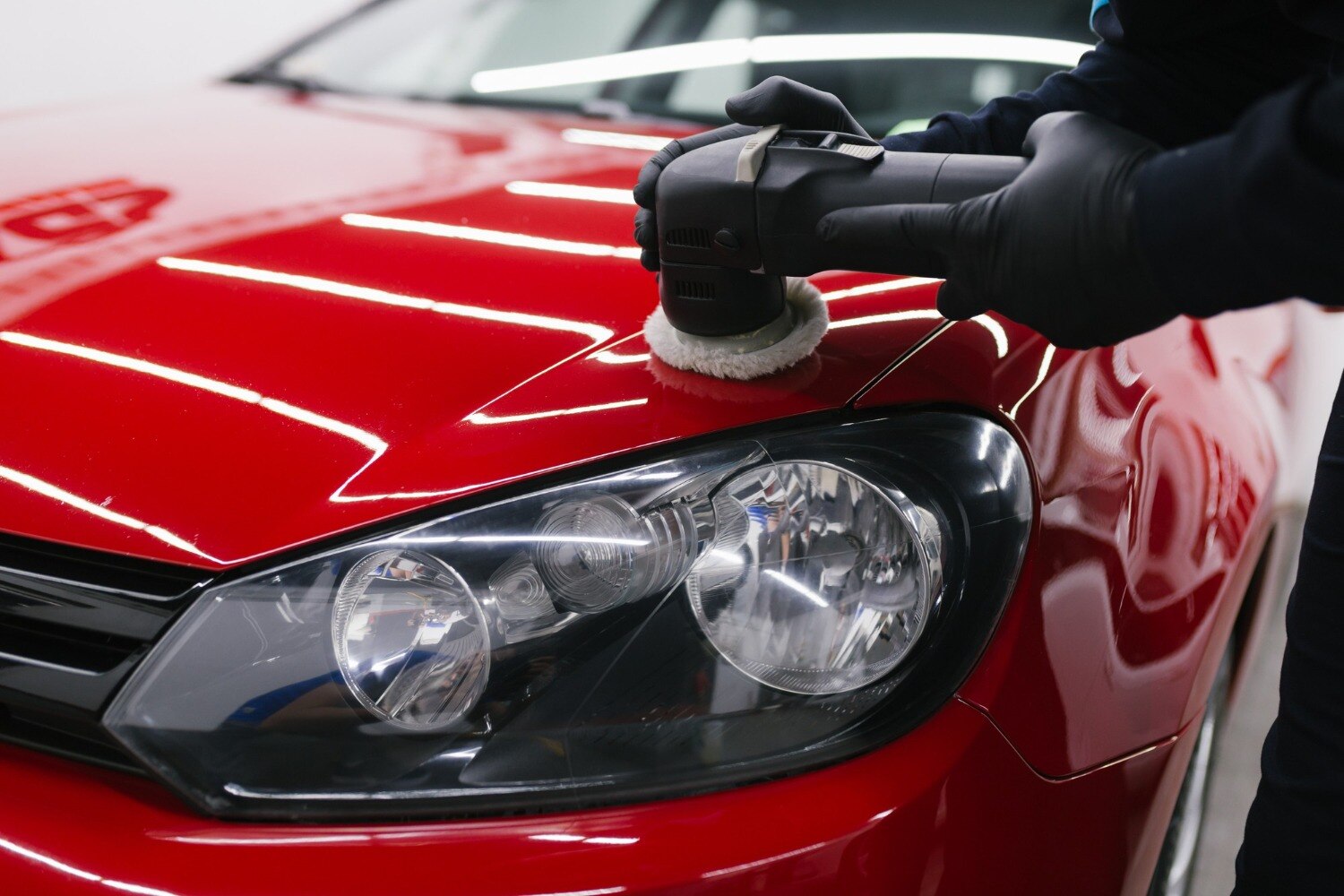
- Inspect the dry paint under strong lighting before machine polishing. Correct swirls or oxidation only when the improvement justifies removing clear coat; polishing is not part of every detail.
- Clean glass with compatible products, removing exterior residue and interior film, then inspect from several angles. Finish cabin cleaning before the final glass pass so fingerprints and cleaner mist do not return.
- Apply trim care, tyre dressing, and a wax, sealant, or ceramic coating after preparation. Protection cannot hide poor correction, and its curing time and maintenance requirements must be stated.
Finish by checking panel gaps, emblems, door jambs, and the fuel-filler area for residue or moisture. A warning light or fluid leak needs mechanical diagnosis, not detailing.
Clean the Interior by Surface and Moisture Tolerance
Start with dry soil removal: a technician removes rubbish, mats, and accessible seats when removal is safe and appropriate, then vacuums carpets, seat seams, seat rails, door jambs, and crevices. This prevents grit from becoming muddy debris during wet cleaning.
A practical interior detailing checklist includes:
- Wash floor mats separately and dry them fully before refitting.
- Clean plastics, rubber, and trim with material-compatible products, then wipe away residue.
- Perform leather cleaning with a suitable cleaner and a soft brush; avoid soaking perforations, stitching, and seat controls.
- Treat textile stains without flooding seat foam or door cards.
- Perform headliner cleaning with minimal moisture and gentle agitation. Soaking bonded foam can leave rings, cause sagging, or detach the fabric.
- Sanitise high-touch surfaces with a low-residue product that will not damage switches, coatings, or touchscreens.
- Clean interior glass last, removing film and fingerprints with a compatible, low-residue glass product.
Technicians should shield or avoid seat-mounted airbags, USB ports, charging connectors, microphones, exposed wiring, infotainment screens, and camera lenses. Keep liquids off these systems; never spray directly onto a switch or screen.
Clean driver-assistance cameras and radar surfaces without claiming that cleaning recalibrates them. A disturbed or misaligned system needs the vehicle maker’s specified diagnostic and calibration procedure.
Odour treatment must remove the source—spills, smoke deposits, pet contamination, wet carpet, or a dirty cabin filter—before adding fragrance. Ozone is not a routine substitute for remediation and can irritate the lungs.
Compare Packages by Process, Not by Marketing Labels
A low price often reflects a narrower process, not a better deal. Compare the named work, surfaces covered, and limits of the result.
| Option | What the process includes | What it does not include |
|---|---|---|
| Professional car wash | Rinse, contact wash, wheel and tyre cleaning, drying, and basic glass care | Paint decontamination, polishing, stain removal, or lasting protection |
| Interior cleaning | Vacuuming, plastics and trim cleaning, glass cleaning, mat washing, and high-touch surface cleaning | Deep upholstery extraction, leather repair, or guaranteed odour removal |
| Full car detailing | Coordinated interior and exterior cleaning, decontamination, trim care, glass work, and a documented inspection | Automatic correction of every scratch, stain, or mechanical fault |
| Paint correction | Machine polishing that reduces wash marks, oxidation, and suitable clear-coat defects | Repair of deep scratches through the clear coat or missing paint |
| Paint protection | Wax or sealant applied after paint preparation | Permanent protection or correction of existing defects |
| Ceramic coating | A prepared paint surface receives a specified coating system, followed by curing restrictions and maintenance guidance | A substitute for paint correction; durability depends on washing, exposure, preparation, and curing |
| Upholstery cleaning | Material-appropriate vacuuming, stain treatment, and controlled extraction or low-moisture cleaning | Restoration of torn fabric, split leather, or missing leather pigment |
| Odour treatment | Source removal, cleaning of affected materials, and targeted treatment of the cabin or ventilation system | A perfume that fixes contamination; smoke, mould, or spills can return if the source remains |
Ask Auto Solutions to state which rows are included, what inspection found, and what the handover excludes before approving the package.
Require a Proper Handover and Clear Aftercare Instructions
Do not accept the keys until the vehicle passes a final inspection in good lighting. Check the paint, glass, wheels, trim, upholstery, carpets, and door shuts from several angles, then confirm that no polish, dressing, or compound remains in panel gaps, emblems, fuel-filler areas, or seams.
Ask the provider to confirm:
- Which services were completed, and which stains, scratches, odours, paint defects, or worn materials remain.
- That door jambs, hinges, boot openings, and the fuel-filler area are clean and dry.
- That interior glass has no film, haze, greasy fingerprints, or streaks that impair night visibility.
- That windows, switches, seat controls, infotainment, and other controls work after wet cleaning.
- The product applied for protection, its expected protection duration, curing restrictions, and required drying time before driving, washing, or getting the vehicle wet.
- Which areas were excluded, such as engine-bay cleaning, stain removal beyond the material’s safe limit, paint correction, leather repair, odour-source removal, or sensor calibration.
- Which warning lights, fluid leaks, brake concerns, battery faults, or scan-tool errors were observed and recorded as separate mechanical issues.
The handover should include detailing aftercare in writing: wash frequency, approved shampoo and mitts, drying method, prohibited automatic-brush washes, and when to refresh the protection. A coating is not paint correction or permanent protection, and cleaning a camera or radar surface does not calibrate it.
Frequently asked questions
What should a professional detailer inspect before starting?
The detailer should record existing scratches, dents, stains, odours, damaged trim, warning lights, and loose items in a written condition report with timestamped photographs.
What is the correct order for exterior detailing?
A proper sequence is pre-rinse, wheel and tyre cleaning, contact wash, chemical decontamination, clay treatment when needed, drying, paint correction when agreed, and protection.
How should interior detailing be approached?
Clean the cabin by material and moisture tolerance: vacuum first, then treat fabric, leather, plastics, glass, carpets, and electronics with suitable products and controlled moisture.
What should you check during vehicle handover?
Compare the finished vehicle with the agreed scope, inspect paint and interior in good light, confirm removed items are returned, and obtain clear aftercare instructions.