A fluctuating idle, hesitation, hard starting or an illuminated check-engine light does not prove that dirty injectors are the cause. By the end, you will know which checks separate restricted injector flow from ignition, air, fuel-pressure and engine faults, and when cleaning is appropriate for your fuel system.
Key takeaways
- Confirm injector faults with testing before approving cleaning.
- Rule out ignition, vacuum, fuel-pressure and sensor faults first.
- Use ultrasonic or on-car cleaning when testing identifies deposits.
- Stop driving for severe misfires, stalling, fuel leaks or warning lights.
Which rough-running symptoms point toward injectors—and which do not?
A rough idle with fluctuating engine speed, stalling, engine hesitation, surging, reduced power, misfires, increased fuel consumption or a hard starting car engine can indicate uneven injector delivery. These fuel injector symptoms do not prove that cleaning is needed; the same pattern can come from several systems.
| Sign | Injector-related possibility | Other likely causes |
|---|---|---|
| Rough idle or stalling | Restricted or uneven fuel delivery | Vacuum hoses, throttle body, MAF sensor, EGR faults, low compression |
| Hesitation, surging or reduced power | An injector under-fuelling one or more cylinders | Failed spark plugs, ignition coils, fuel pump, fuel-pressure regulator or clogged fuel filter |
| Hard starting or poor economy | Leaking injector or incorrect spray quantity | Oxygen sensor faults, low fuel pressure or incorrect air-metering data |
| Misfire or check-engine light | Injector flow or electrical fault | Ignition, air leak, compression or valve-timing problems |
P0301 identifies a misfire on cylinder 1, not a dirty injector. Check that cylinder’s spark plug and ignition coil, test compression, and swap the suspected injector with another cylinder; if the code follows the injector, suspicion becomes stronger. A flashing malfunction-indicator lamp, severe shaking or an active misfire requires prompt diagnosis.
Continued misfire can overheat and damage the catalytic converter, so do not drive indefinitely or repeatedly try fuel additive.
What tests should come before you approve injector cleaning?
Approve injector cleaning only after fuel injector diagnosis identifies restricted or deposit-affected flow; otherwise, you risk treating a symptom.
- Scan for diagnostic trouble codes, including a P0301 misfire code. That code identifies cylinder 1, not a dirty injector. Record freeze-frame data and misfire counters.
- Inspect live data and fuel trim data. Persistent positive long-term trim means the controller is adding fuel for a lean condition caused by unmetered air, low fuel pressure, restricted delivery or an under-fuelling injector. Negative trim means fuel is being removed from a rich mixture caused by a leaking or over-fuelling injector or incorrect sensor data.
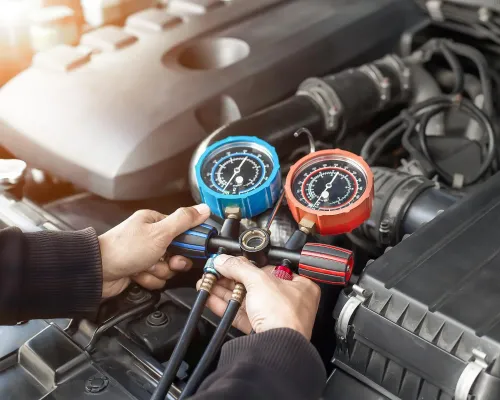
- Perform a fuel pressure test against the vehicle manufacturer’s specified range. A weak pump, blocked filter or faulty regulator can affect every injector.
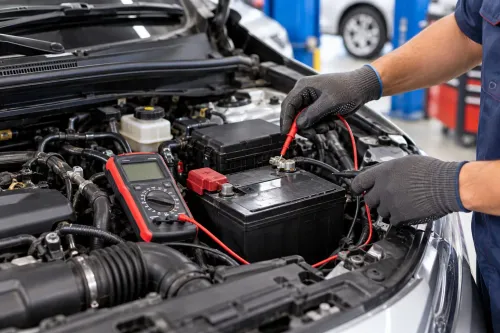
- Measure injector electrical resistance and inspect each connector for loose terminals, corrosion or damaged wiring. P0201 can indicate an open coil, damaged wiring, poor connector contact or a failed injector driver; cleaning cannot repair it.
- Test for vacuum leaks with an approved smoke test or another suitable method.
- Perform injector balance or flow testing.
| Result | What it suggests | Decision |
|---|---|---|
| Positive trim | Lean mixture | Find the air, pressure or delivery cause |
| Negative trim | Rich mixture | Check leakage, over-fuelling and sensor data |
A strong professional evaluation records spray pattern, flow rate and leakage. At Auto Solutions, ask for those results before approving cleaning.
Which cleaning method fits the injector and fuel system?
On-car injector cleaning uses a pressurised solvent connected to the fuel rail. It can circulate cleaner through the injectors and fuel system, but it cannot prove that every injector delivers the same quantity or seals correctly after closing.
| Method | What it can show | Main limitation |
|---|---|---|
| On-car pressurised cleaning | Whether solvent treatment improves running | No reliable individual flow, spray-pattern or leak comparison |
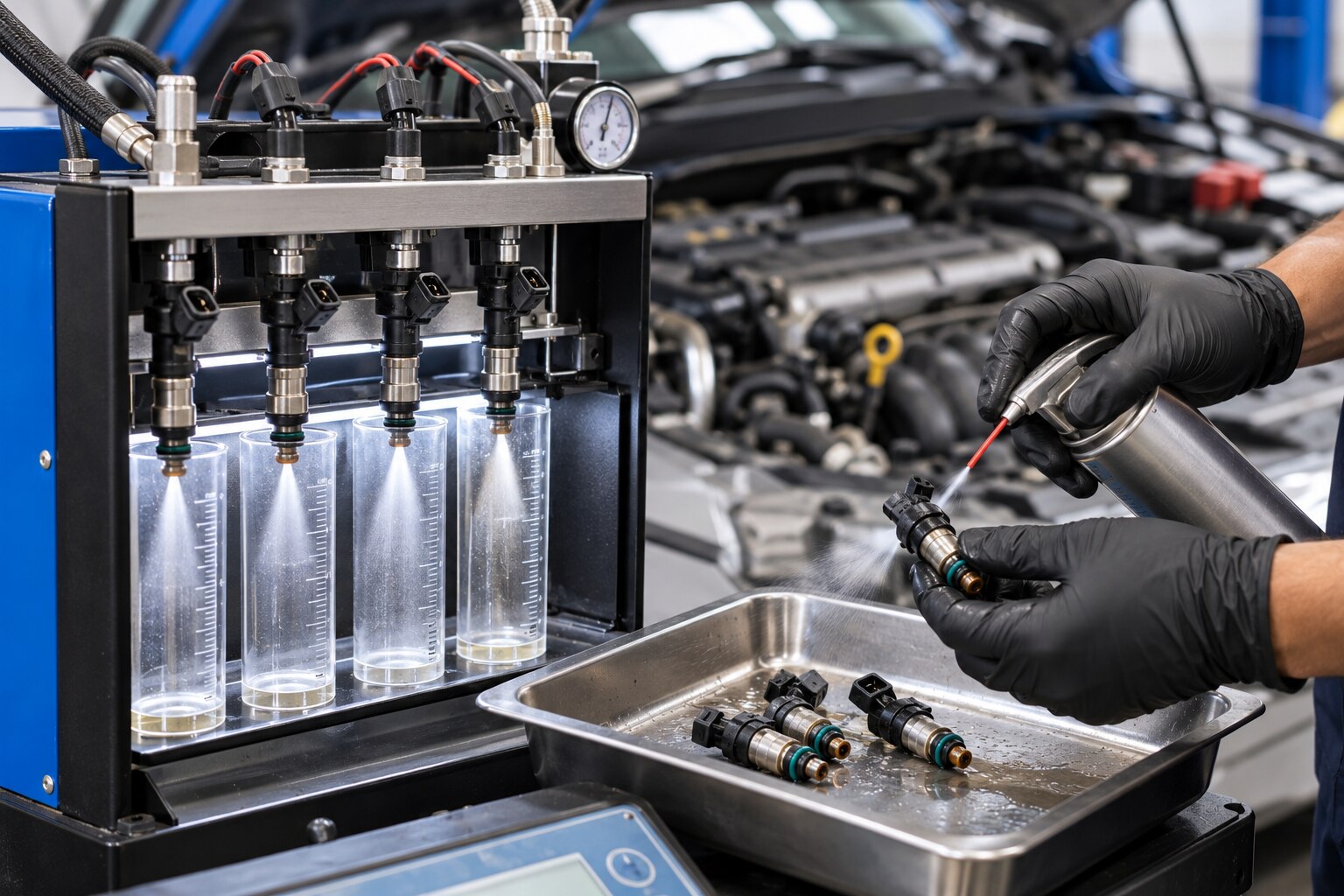
| Off-car bench cleaning | Electrical checks, before-and-after flow comparison, spray-pattern inspection and a leak test | Requires injector removal and correct seals on refitting |
| Ultrasonic injector cleaning | Deposits removed while the removed injector is pulsed in a cleaning bath | Cleaning does not repair electrical or mechanical damage |
Choose off-car testing when the fault is cylinder-specific, flow imbalance is suspected, or on-car treatment produced no measurable improvement. Replace an injector that leaks, has a damaged body or nozzle, has abnormal mechanical operation, or has a failed solenoid or piezo actuator; cleaning will not restore those parts.
System design changes the procedure:
- Port fuel injection sprays petrol upstream of the intake valve, so conventional bench equipment may apply.
- Direct injection injector cleaning requires higher-pressure, manufacturer-specified testing. Follow injector coding or adaptation procedures where applicable.
- Diesel common-rail injectors need dedicated high-pressure equipment and procedures.
- Carbureted engines do not use electronic fuel injectors.
Direct injection sprays fuel into the combustion chamber, so injector cleaning does not remove its characteristic intake-valve deposits. Inspect and clean those deposits separately when testing justifies it.
When is a tank additive reasonable, and when is it the wrong tool?
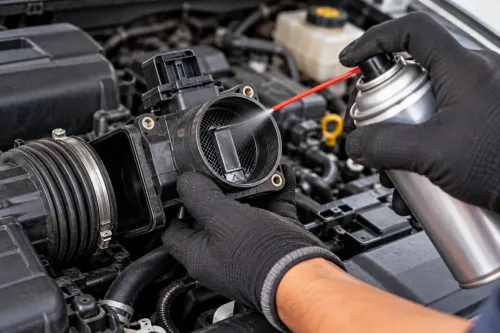
A fuel injector cleaner additive is reasonable only after basic diagnosis shows mild deposit-related restriction. A fuel system cleaner may control deposits or remove light deposits, but it is not a repair for a check-engine light or unexplained rough idle.
It is the wrong tool when:
- Deposits are severe enough to restrict flow or distort the spray pattern.
- The injector leaks, dribbles after shutdown, or has mechanical damage.
- A blocked fuel filter is limiting fuel delivery.
- The tank or fuel lines contain contaminated fuel.
- An injector has an electrical fault, damaged wiring, or a failed driver.
- Low compression, incorrect valve timing, or another mechanical fault causes the poor running.
Gasoline detergent additives can help maintain cleanliness, but regulatory registration means the product meets additive requirements; it does not prove that the bottle will cure a drivability fault. Verified repair work uses test results to identify the failed component, then cleans or replaces it with the correct procedure.
Read the label before adding anything. Confirm petrol or diesel compatibility, the stated dosage, and the tank volume covered, and never exceed the dose. At a service centre, ask whether the technician can show the test result that justifies cleaning, rather than simply recommending a bottle or solvent treatment.
What should improve after cleaning—and when should you stop driving?
If restricted flow or a poor spray pattern caused the fault, fuel injector cleaning results should include a more stable idle, fewer hesitation events, easier starting and more even acceleration. After fuel injector cleaning, confirm improvement through fuel-trim readings or lower misfire-counter values, not impressions alone.
- Accept the result only when the engine runs smoothly and testing shows improved fuel trims or fewer misfires.
- Recheck the vehicle if roughness remains, the check-engine light returns, a cylinder-specific misfire persists, starting remains difficult, or you notice fuel smell, black smoke or stalling.
- Stop driving promptly when you see a flashing check-engine light. An active misfire can overheat and damage the catalytic converter.
Fuel injector cleaning risks include paying for work without a diagnosis, pushing loosened contamination into the fuel filter or injector, damaging injector seals, using the wrong pressure or procedure, and masking an ignition, fuel-supply or compression fault.
Do not keep adding cleaner or drive indefinitely with a flashing warning lamp: obtain a fault-code scan and fuel-system inspection, then approve cleaning only when evidence shows restricted or deposit-affected injectors and the method matches the engine.
Frequently asked questions
Which rough-running symptoms point toward fuel injectors?
Fluctuating idle, hesitation, surging, misfires, hard starting and reduced power can indicate uneven injector delivery. They also occur with ignition, vacuum, fuel-pressure and sensor faults, so symptoms alone do not justify cleaning.
What tests should come before injector cleaning?
Ask for fault-code scanning, live-data checks, fuel-pressure testing, ignition inspection and injector balance or contribution testing. These checks help separate injector faults from other causes of poor engine performance.
Which injector cleaning method should be used?
Use the method that matches the test result and fuel system. On-car cleaning treats the installed system, while bench testing and ultrasonic cleaning allow flow, spray pattern and leakage comparisons.
When is a tank fuel additive reasonable?
A reputable additive can suit light deposit prevention when the engine has no serious symptoms and the product matches the fuel system. It is the wrong tool for a leaking, electrically faulty or severely restricted injector.
What should improve after injector cleaning, and when should you stop driving?
A successful repair should improve idle quality, starting, hesitation, misfires and fuel use when injectors caused the fault. Stop driving for a fuel leak, severe misfire, stalling in traffic, flashing engine warning light or strong fuel smell.